
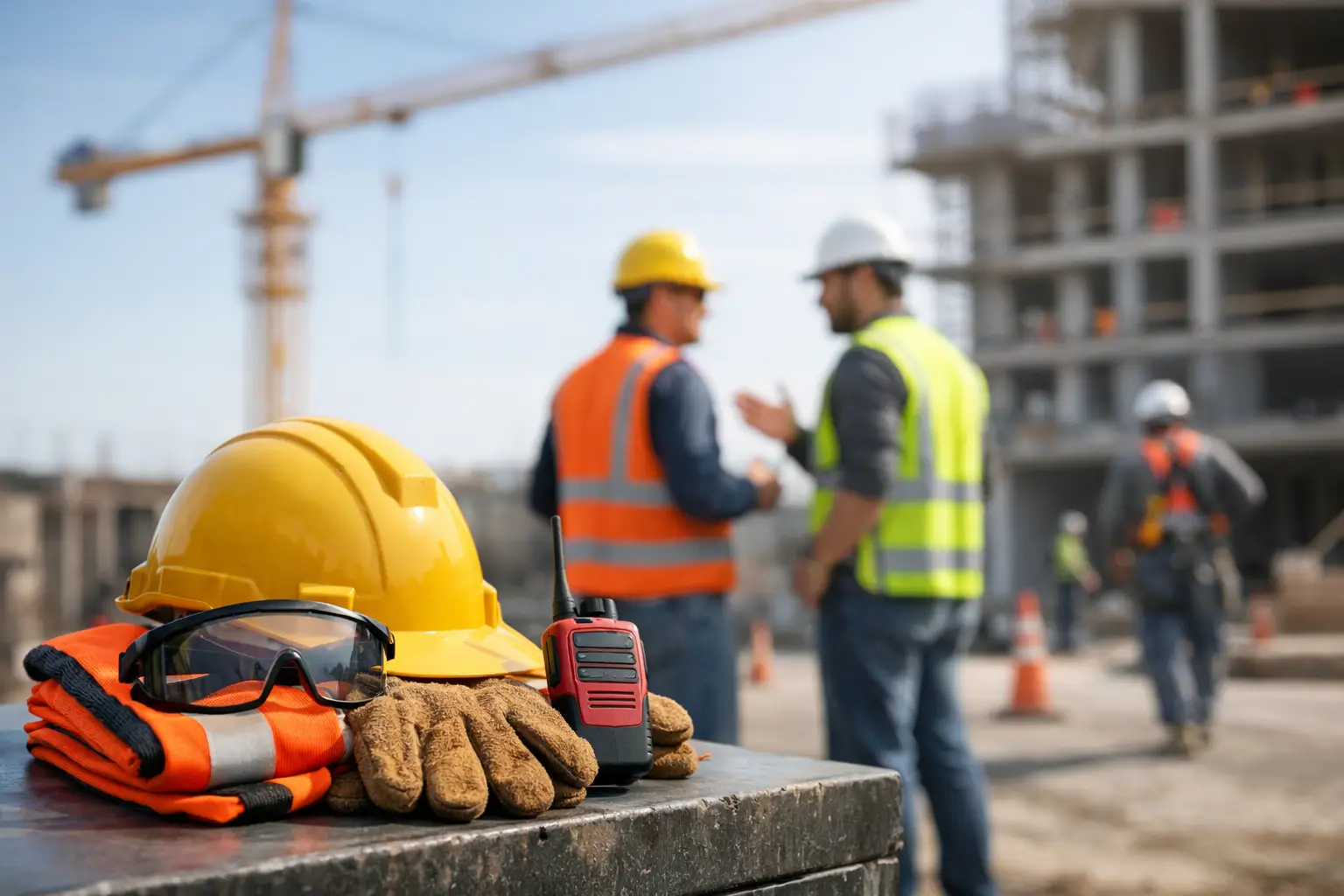
A construction incident rarely begins at the moment someone is hurt. It usually starts earlier: a rushed handover, a missing barricade, an unreviewed change in work sequence, or a worker who is unsure how to raise a concern. Effective construction incident reduction addresses those ordinary site conditions before they become injuries, damage, delays, or regulatory problems.
For contractors and project leaders, the goal is not to produce more paperwork for its own sake. It is to make safe work the normal way work gets planned, supervised, and completed. That requires clear risk controls, capable people on site, and evidence that the system is working in practice.
Start Construction Incident Reduction Before Work Begins
The most useful time to prevent an incident is before crews arrive at the work area. Risk assessments should reflect the actual task, location, equipment, people, and work sequence – not a generic activity copied from a previous project.
A renovation contractor, for example, may have a suitable assessment for drilling and demolition in an occupied commercial unit. But it may not address a new complication such as public access, overhead services, restricted evacuation routes, or simultaneous work by another trade. When site conditions change, the assessment and control measures need to change with them.
Planning should identify who may be exposed, what could go wrong, and which controls are realistic for the work. Elimination and substitution are preferable where possible. If those are not practical, use engineering controls such as edge protection, covers, barriers, ventilation, or machine guards before relying solely on procedures and personal protective equipment.
Personal protective equipment matters, but it is the final line of defense. A hard hat does not correct poor lifting arrangements. A safety harness does not make an incomplete anchorage plan acceptable. Construction leaders reduce risk faster when they focus first on removing hazards or separating people from them.
Build controls into the work sequence
Method statements and safe work procedures are most effective when crews can see how they apply to the day’s job. Include the sequence of work, equipment needed, access arrangements, exclusion zones, emergency actions, and the person responsible for supervision.
This is especially important for high-risk activities such as work at height, lifting operations, electrical work, confined-space entry, hot work, excavation, and demolition. These tasks require specific controls, but the bigger risk often appears at the interface between activities. A lifting zone may overlap with pedestrian access. Hot work may take place beside combustible materials. An excavation may change vehicle routes.
A short coordination discussion before work starts can uncover these conflicts. It should involve the supervisor, relevant subcontractors, and, where necessary, the client or building representative. The purpose is simple: agree on who controls the area, what work can proceed at the same time, and when the plan must stop and be reviewed.
Make Supervisors the Daily Control Point
Policies set expectations, but supervisors turn those expectations into site behavior. They are often the first to notice if workers are bypassing a barricade, using unsuitable access equipment, or continuing work after weather conditions have changed.
Supervisors need more than a checklist. They need the authority to pause unsafe work, practical knowledge of the task, and enough time to inspect the areas they oversee. A supervisor responsible for too many locations or unfamiliar subcontractors may struggle to identify developing problems before they escalate.
Daily pre-start briefings are valuable when they are specific. Instead of repeating general reminders, discuss the work planned that day, new hazards, changes in the work environment, and lessons from recent near misses. Ask workers to confirm the controls, rather than assuming a signature means they understand them.
Language and literacy also matter. Construction crews can include workers with different levels of English proficiency and varying technical experience. Use plain language, demonstrations, photographs, and translated materials where appropriate. A worker should be able to explain the safe method back to the supervisor, especially for higher-risk work.
Treat Near Misses as Early Warnings
An unreported near miss is a lost opportunity. A falling tool that misses someone, a load that shifts during lifting, or a worker who nearly slips on an unmarked wet surface may not cause immediate harm. However, each event shows that one or more controls did not perform as intended.
Teams should make reporting easy and non-punitive. Workers are less likely to speak up if they expect blame for every mistake or delay. The right response is to establish the facts, make the area safe, identify contributing conditions, and communicate the corrective action quickly.
Not every near miss requires a lengthy investigation. The level of review should match the potential severity and complexity of the event. A minor housekeeping issue may need immediate correction and a briefing. A near miss involving a suspended load, energized equipment, or a fall from height deserves a deeper review of planning, supervision, equipment, and competence.
The key is closing the loop. If workers report issues but never see a response, reporting will decline. Record what was found, who owns the action, the deadline, and how completion will be verified. This turns incident reporting from an administrative exercise into a visible safety improvement process.
Use Inspections to Test Reality
Routine site inspections should test whether the agreed controls are still in place. Check access routes, housekeeping, barricades, scaffolds, temporary electrical systems, equipment condition, storage, signage, and worker practices. The inspection should also look for new risks created by changes in the project.
A good inspection does not only list faults. It distinguishes between immediate corrections and underlying system issues. For example, loose materials on a walkway should be removed immediately. But if the same problem reappears every week, the underlying cause may be inadequate storage space, unclear trade responsibilities, or unrealistic cleanup time.
This distinction helps management spend effort where it will have the greatest effect. Repeated reminders alone rarely solve a problem caused by poor logistics or weak planning.
Measure what leaders can act on
Incident numbers are necessary, but they are lagging indicators. They tell you what has already happened. To support construction incident reduction, track leading indicators that show whether critical controls are being checked and maintained.
Useful measures may include the completion and quality of pre-start briefings, corrective-action closure rates, high-risk work permit checks, supervisor inspection findings, worker observations, and the number of repeated issues. Avoid collecting data only because it is easy to count. The best measures point to a specific decision or action.
For a small contractor, a simple weekly review may be enough. For a larger or multi-site operation, a more structured dashboard and management review may be needed. The system should fit the scale and risk profile of the work while still providing clear accountability.
Keep Compliance Connected to Site Operations
In Singapore, safety management documentation, risk assessments, competent supervision, and professional support are closely connected to regulatory expectations and BizSAFE requirements. Yet compliance produces the strongest results when it is treated as part of operational control, not a separate office task.
That means documents must be current, available to the people using them, and reflected in site conditions. It means training records should match actual roles. It also means management representatives need a clear view of open risks, incidents, audits, and required follow-up.
For organizations with limited internal safety resources, outsourced WSHE support can provide practical oversight during projects, renewals, and periods of higher operational risk. Safetylink Services supports businesses with hands-on guidance that connects certification and risk-management requirements to real workplace controls.
Construction work changes quickly. A control that was suitable on Monday may be inadequate by Thursday because a new trade has arrived, access has shifted, or the work has entered a different phase. Regular review is not a sign that the original plan failed. It is how a safety system stays relevant.
The strongest safety culture is visible in small decisions: stopping to correct an unsafe access route, revising a plan when conditions change, and listening when a worker flags a concern. Those decisions protect people, preserve project momentum, and build the kind of incident reduction that lasts beyond a single job site.
Related Posts





Recent Works