
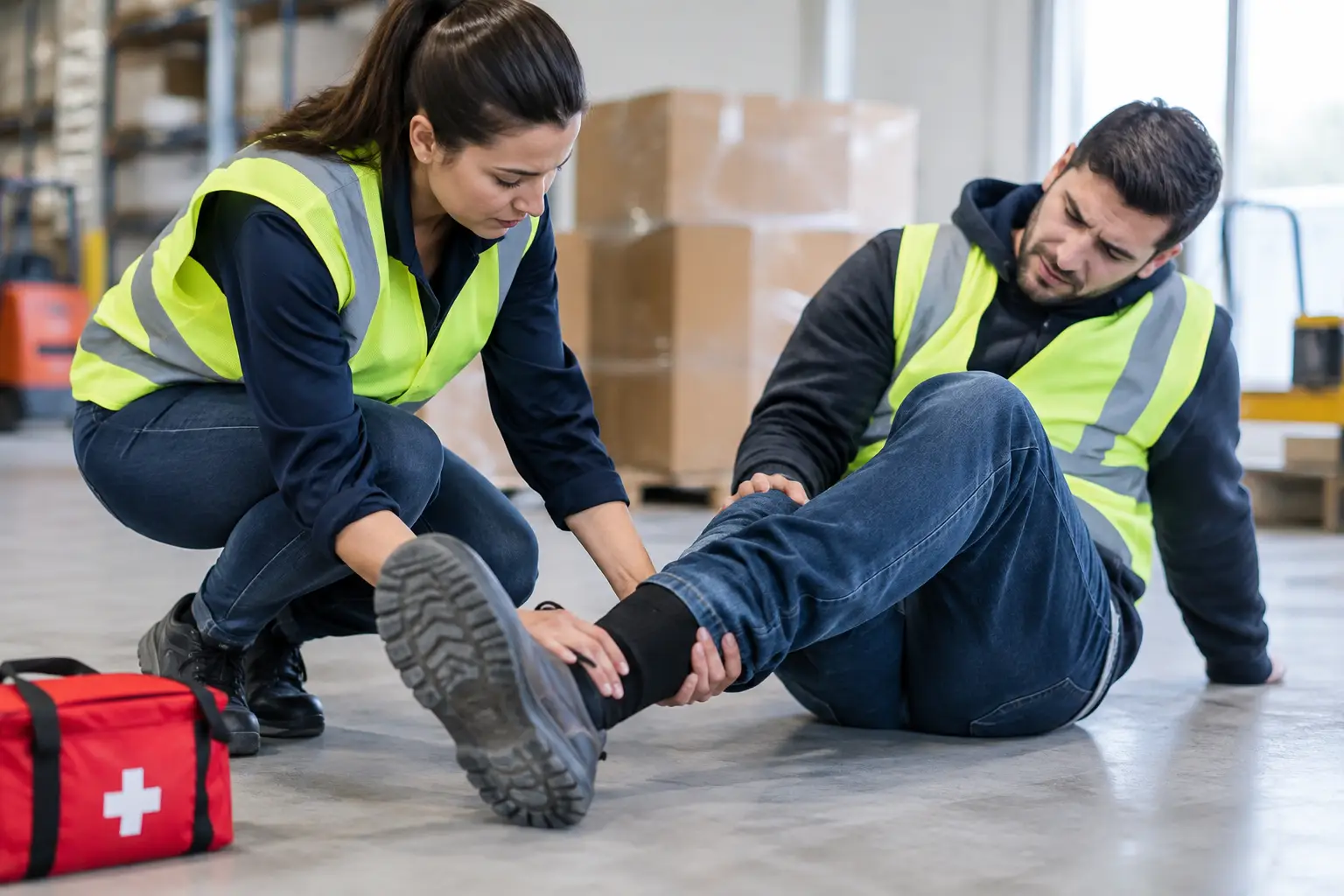
A worker slips while moving materials, receives first aid, and says they are fine. The job is busy, so the team carries on. Two days later, the worker reports worsening pain and takes medical leave. This is when workplace accident reporting becomes more than paperwork. The quality of the first response can affect the worker’s recovery, the accuracy of the investigation, regulatory compliance, and the company’s ability to prevent the next incident.
For Singapore employers, a clear reporting process is a practical control within the wider workplace safety and health system. It gives management reliable facts, helps supervisors act consistently, and shows workers that safety concerns will be taken seriously. Whether your business operates a construction site, warehouse, cleaning operation, manufacturing facility, or office, the principle is the same: report early, preserve facts, investigate properly, and close the loop.
Why Workplace Accident Reporting Cannot Wait
An accident report is not an admission of fault. It is a record of what is known at a particular time: who was involved, what happened, where it occurred, what immediate treatment was provided, and what controls were put in place. Delaying that record creates gaps. Witnesses forget details, physical conditions change, CCTV footage may be overwritten, and assumptions begin to replace evidence.
Prompt reporting also allows an employer to identify whether the event is isolated or part of a wider pattern. A hand injury from a sharp edge may point to inadequate guarding, unsuitable gloves, poor material handling, or a rushed work sequence. A single report rarely answers every question, but it starts the process that can.
There is also a business case. Unreported or poorly documented incidents can lead to repeated injuries, lost workdays, project disruption, claims disputes, client concerns, and greater scrutiny during audits or tender assessments. A disciplined process supports operational continuity just as much as it supports compliance.
What Should Be Reported?
Employees should be encouraged to report all work-related accidents, injuries, dangerous occurrences, and near misses. The threshold should not be limited to severe harm. Minor cuts, small spills, struck-by events without injury, equipment defects, and unsafe conditions often reveal risks before they become serious incidents.
A near miss deserves particular attention. If a suspended object falls beside a worker, or a forklift narrowly misses a pedestrian, the absence of injury is fortunate, not proof that no action is required. Treating near misses as learning opportunities helps build a preventive safety culture without waiting for someone to be hurt.
Employers must also understand that certain work-related accidents, occupational diseases, and dangerous occurrences may require notification or reporting to the Ministry of Manpower under Singapore’s workplace safety and health requirements. The applicable process and timeframe depend on the nature and severity of the event. Do not rely on informal judgment when a reportable incident may be involved. Escalate it immediately to the appointed safety personnel or management representative, verify the current requirements, and maintain the required records.
The First Hour: Protect People and Preserve Facts
The first priority is always care. Stop work where necessary, make the area safe, provide first aid, and arrange medical attention or emergency support. A supervisor should not pressure an injured employee to continue working simply because the injury appears minor. Symptoms can develop later, and the worker needs an appropriate assessment.
Once immediate danger is controlled, preserve the scene as far as reasonably possible. Do not restart equipment, remove broken components, clean a spill, or rearrange materials before key facts have been captured, unless doing so is needed to prevent further harm. Take photographs, note weather and lighting conditions where relevant, identify equipment involved, and secure available CCTV footage.
The following information should be collected promptly:
- The date, time, exact location, and work activity underway
- Names of the injured person, supervisor, witnesses, and other parties involved
- A factual description of events before, during, and immediately after the incident
- Details of injury, first aid, medical referral, and any work restriction or absence
- Equipment, substances, tools, permits, procedures, risk assessments, and personal protective equipment connected to the work
Keep the first account factual. Statements such as “the worker was careless” are conclusions, not evidence. A better record is: “The worker was carrying two cartons down the stairway when they slipped on a wet step. Warning signage was not observed at the landing.” Facts can be tested during the investigation. Labels can obscure the real causes.
Assign Clear Roles Before an Incident Happens
A reporting process fails when everyone assumes someone else will handle it. Employees need to know who to inform immediately, usually their supervisor or site representative. Supervisors need to know how to arrange care, secure the area, collect initial information, and escalate the matter. Management needs visibility over significant events and authority to provide resources for corrective action.
For businesses with multiple sites or shift work, a simple escalation matrix is useful. It should state who receives the first report, who decides whether external notification is required, who leads the investigation, and who approves corrective actions. Contact details should be current and available after normal office hours.
The appointed Workplace Safety and Health Officer, safety coordinator, project manager, or external WSHE professional can provide technical guidance, but accountability still sits with the employer and management team. Outsourced support works best when internal supervisors report promptly and provide complete information.
Investigate Causes, Not Just Actions
A good investigation asks why the event was possible. It looks beyond the final action by the injured worker and examines work design, supervision, training, equipment condition, environmental conditions, communication, and control measures.
Consider a worker who falls from a ladder. The immediate cause may be loss of balance. The contributing causes may include an unsuitable ladder, an uneven surface, a need to overreach, insufficient time to obtain proper access equipment, or no pre-task check. If the corrective action is only “remind workers to be careful,” the same conditions remain.
Review the relevant risk assessment and safe work procedure against the actual task. Were they available at the point of work? Did they reflect current conditions? Had employees been briefed and trained? Were controls followed, practical, and adequately supervised? This review is particularly valuable after changes in work scope, manpower, materials, or site layout.
Interviews should be conducted respectfully and without blame. Workers are more likely to provide useful information when they believe the purpose is prevention rather than punishment. That does not mean deliberate misconduct should be ignored. It means the investigation should distinguish between an individual choice and a system that made an unsafe choice likely.
Turn Findings Into Corrective Action
The investigation is only useful when it produces actions that reduce risk. Each action should have an owner, deadline, and verification method. “Improve housekeeping” is too vague. “Install designated storage racks at Loading Bay B, brief all shift teams, and verify weekly during supervisor inspections” is measurable.
Controls should follow the hierarchy of control where possible. Eliminate the hazard or substitute a safer method before relying solely on procedures, training, or personal protective equipment. For example, a mechanical lifting aid may reduce manual handling risk more effectively than repeated reminders about correct lifting posture.
Update the risk assessment, safe work procedure, inspection checklist, and training records when the incident reveals a gap. Share relevant lessons with affected teams, but protect personal confidentiality. The message should focus on the hazard, the changed control, and what workers need to do differently.
Keep Records That Stand Up to Review
A complete incident file should include the initial report, photographs, witness statements, medical or treatment information handled appropriately, investigation findings, risk-assessment review, corrective-action tracker, and proof of completion. Store records securely and limit access to people with a legitimate need to know.
For BizSAFE-certified companies, consistent accident reporting supports the risk-management practices clients and auditors expect to see. It demonstrates that risk assessments are active working documents rather than files kept only for certification. It also gives management useful data. Reviewing incident and near-miss trends by location, task, contractor, shift, or injury type can reveal priorities that are not obvious from a single event.
Safetylink Services can support organizations that need practical help establishing reporting workflows, reviewing risk assessments, or providing on-site WSHE professional coverage. The aim is not to create more forms. It is to create a process your team can use confidently when real work pressures are high.
The strongest reporting culture is visible in small moments: a worker flags a loose cable, a supervisor records it, the hazard is corrected, and the team sees that speaking up leads to action. That is how reporting becomes part of everyday prevention rather than a task reserved for serious accidents.
Related Posts





Recent Works